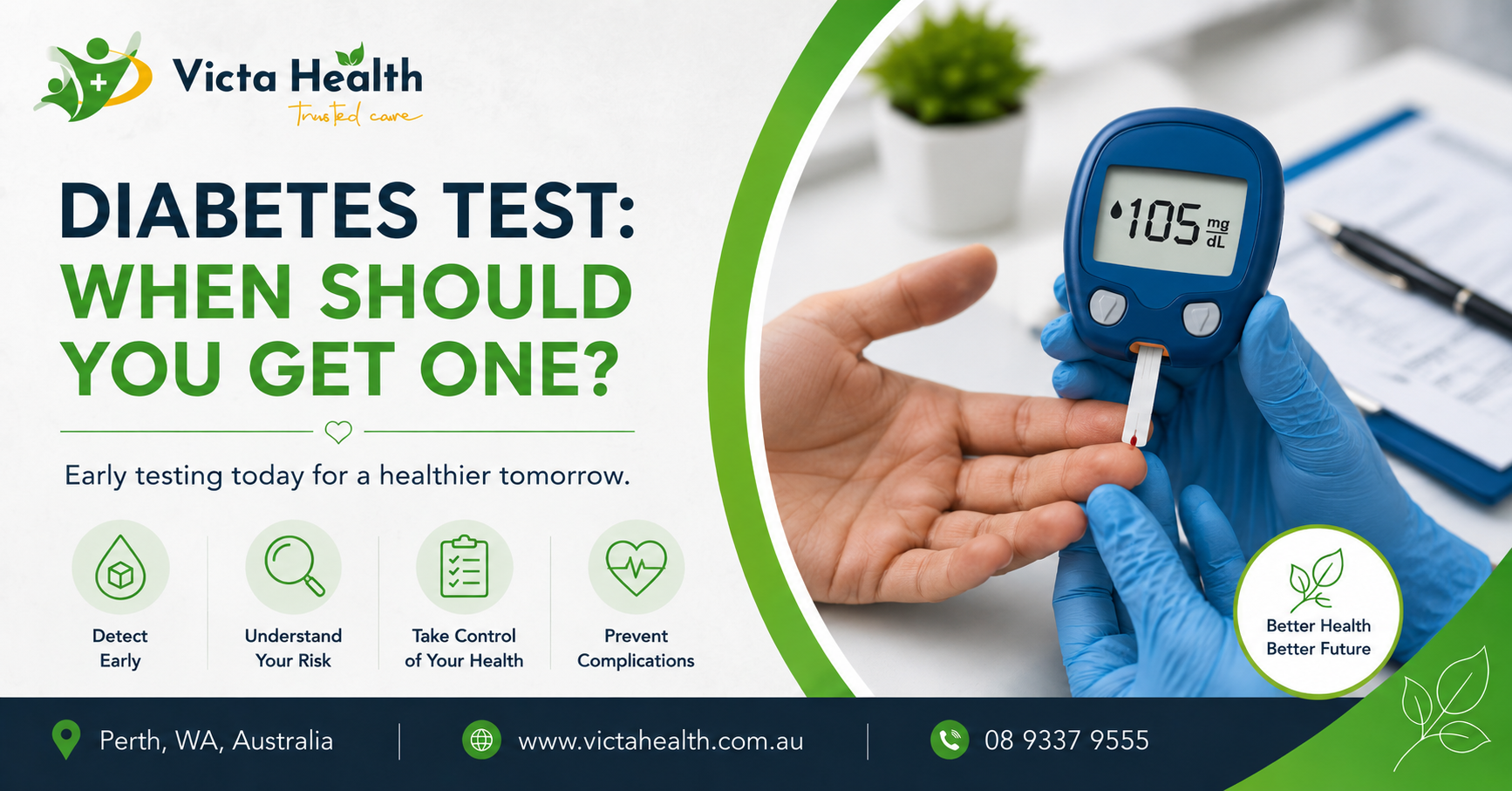
A Diabetes Test helps assess how your body manages blood sugar levels and can identify diabetes or prediabetes before symptoms become more noticeable. Early testing is important because diabetes often develops gradually; many people may not realise they have elevated blood sugar until routine screening or a health assessment.
At Victa Health, diabetes screening may be recommended as part of a preventive health check or when symptoms and risk factors indicate further assessment is appropriate.
Why Is a Diabetes Test Important?
Diabetes can affect many parts of the body, including the heart, kidneys, eyes, nerves and blood vessels if left unmanaged. A Diabetes Test helps detect abnormal blood glucose levels early, allowing appropriate medical assessment and management before complications develop.
Early detection may also identify prediabetes, giving individuals the opportunity to make lifestyle changes under the guidance of a healthcare professional.
When Should You Consider a Diabetes Test?
A Diabetes Test may be recommended if you have symptoms suggestive of diabetes or certain health risk factors.
Common Symptoms
You should speak with your healthcare provider if you experience:
- Increased thirst
- Frequent urination
- Unexplained tiredness
- Blurred vision
- Slow-healing cuts or wounds
- Unexplained weight loss
Risk Factors
You may also benefit from diabetes screening if you have:
- A family history of diabetes
- High blood pressure
- High cholesterol
- Overweight or obesity
- Previous gestational diabetes
- A physically inactive lifestyle
Preventive Health Screening
Even if you feel well, your healthcare provider may recommend a Diabetes Test during a routine health check based on your age, medical history and overall risk profile.
What Types of Diabetes Tests Are Available?
Several tests are commonly used to assess blood sugar levels.
Fasting Blood Glucose Test
Measures your blood sugar level after fasting for at least eight hours.
HbA1c Test
Provides an average of your blood sugar levels over the previous two to three months.
Random Blood Sugar Test
Measures blood glucose at any time of the day without requiring fasting.
Oral Glucose Tolerance Test
Measures how your body processes glucose after consuming a glucose drink and may be recommended in selected situations.
What Happens During a Diabetes Test?
Most diabetes tests require only a simple blood sample.
Before the Test
Depending on the type of test, you may be asked to fast beforehand.
During the Test
A healthcare professional will collect a small blood sample for laboratory analysis.
After the Test
Once your results are available, your healthcare provider will explain what they mean and whether any additional investigations or follow-up are recommended.
Understanding Your Results
A Diabetes Test result is only one part of assessing your overall health. Your healthcare provider will interpret the findings alongside your symptoms, medical history, physical examination and any other relevant investigations.
If diabetes or prediabetes is identified, an appropriate management plan can be discussed based on your individual circumstances.
Can Diabetes Be Prevented?
Although not every type of diabetes can be prevented, healthy lifestyle habits may help reduce the risk of developing Type 2 diabetes.
These include:
- Eating a balanced diet
- Staying physically active
- Maintaining a healthy weight
- Attending regular health checks
- Following your healthcare provider’s advice
Frequently Asked Questions
Does every Diabetes Test require fasting?
No. Some tests, such as the HbA1c Test and Random Blood Sugar Test, generally do not require fasting, while a fasting blood glucose test does.
How often should I have a Diabetes Test?
The frequency depends on your age, health history, symptoms and individual risk factors. Your healthcare provider can recommend an appropriate testing schedule.
Can diabetes develop without symptoms?
Yes. Many people have no noticeable symptoms during the early stages, making routine screening important for those at increased risk.
Is a Diabetes Test painful?
Diabetes tests involve a routine blood sample and are completed within a few minutes.
Can a Health Check include a Diabetes Test?
Yes. Depending on your age, symptoms and risk factors, your healthcare provider may recommend a Diabetes Test as part of a preventive health assessment.
Conclusion
A Diabetes Test plays an important role in detecting diabetes or prediabetes early, often before significant symptoms develop. Understanding your risk factors, recognising potential symptoms and attending regular health checks can support early diagnosis and timely management. If you have concerns about your blood sugar levels or would like to discuss diabetes screening, seeking medical advice is the best next step.
Book an Appointment at Victa Health
If you have symptoms of diabetes, recognised risk factors, or simply want to stay proactive about your health, book an appointment at Victa Health. Our healthcare team can assess your individual needs, discuss appropriate testing options and help you make informed decisions about your health.
Disclaimer
This blog is intended for general educational purposes only and should not be considered medical advice. Individual circumstances vary, and the information provided does not replace a consultation with a qualified healthcare professional. If you have symptoms or concerns about diabetes, please seek personalised medical advice.