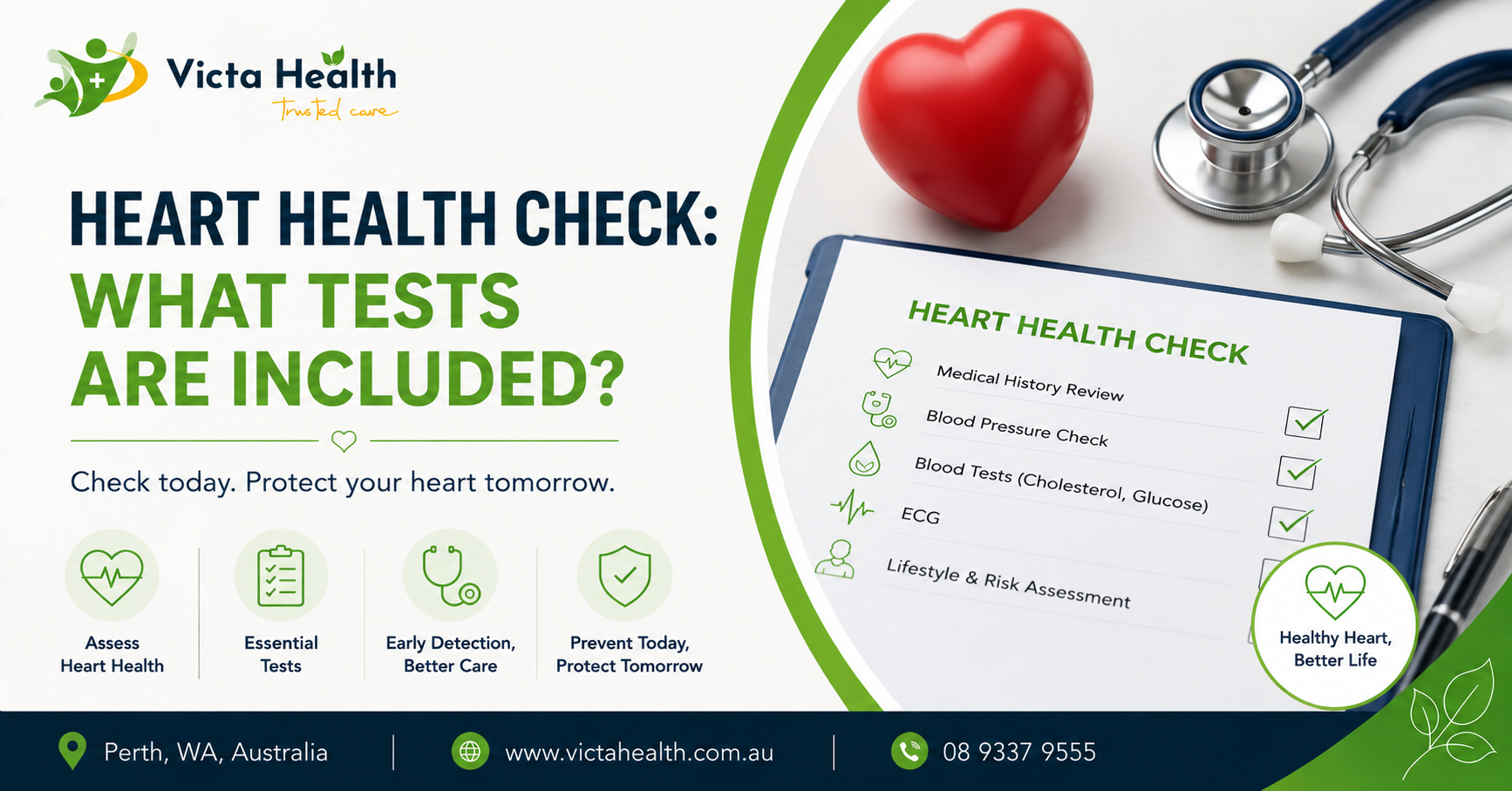
A Heart Health Check helps assess your risk of developing cardiovascular disease and provides valuable information about your overall heart health. Many heart conditions develop gradually and may not cause noticeable symptoms during the early stages, making preventive assessments an important part of maintaining long-term well-being.
At Victa Health, a Heart Health Check is tailored to your age, medical history, lifestyle and individual risk factors. Depending on your health needs, your healthcare provider may recommend different assessments to better understand your cardiovascular health.
What Is a Heart Health Check?
A Heart Health Check is a preventive assessment that evaluates factors associated with heart disease and stroke. Rather than relying on a single test, it combines your medical history, lifestyle, physical examination and, when appropriate, diagnostic investigations to estimate your overall cardiovascular risk.
The goal is to identify potential concerns early so that appropriate advice, monitoring or treatment can be considered if needed.
Why Is a Heart Health Check Important?
Cardiovascular disease remains one of the leading causes of illness worldwide. Many risk factors can be managed more effectively when identified early.
A Heart Health Check may help:
- Assess your risk of heart disease
- Detect high blood pressure
- Identify high cholesterol
- Screen for diabetes and other contributing conditions
- Support preventive healthcare and healthy lifestyle planning
Who Should Consider a Heart Health Check?
A Heart Health Check may be appropriate for adults, particularly those with recognised cardiovascular risk factors.
Family History of Heart Disease
If close family members have experienced heart disease or stroke, your healthcare provider may recommend earlier or more regular assessments.
Existing Medical Conditions
People with the following conditions may benefit from regular monitoring:
- High blood pressure
- Diabetes
- High cholesterol
- Kidney disease
- Obesity
Lifestyle Risk Factors
A Heart Health Check may also be recommended if you:
- Smoke
- Are physically inactive
- Have an unhealthy diet
- Consume excessive alcohol
- Experience ongoing stress
Even if you feel well, preventive screening may still be beneficial based on your individual risk profile.
What Tests May Be Included?
The assessments included in a Heart Health Check vary depending on your age, symptoms and medical history.
Medical History Review
Your healthcare provider may discuss:
- Family history
- Current medications
- Existing medical conditions
- Lifestyle habits
- Current symptoms
Physical Examination
A routine assessment may include:
- Blood pressure measurement
- Heart rate
- Weight and Body Mass Index (BMI)
- General cardiovascular examination
Blood Tests
Blood tests may include:
- Cholesterol levels
- Blood Sugar Test
- Kidney function
- Liver function
- Other investigations if clinically indicated
Additional Heart Tests
Depending on your symptoms or individual risk, your healthcare provider may recommend:
- Electrocardiogram (ECG)
- Further cardiac investigations
- Referral for specialist assessment if required
How Often Should You Have a Heart Health Check?
The recommended frequency depends on your age, medical history and cardiovascular risk factors.
Some adults may benefit from periodic preventive assessments, while others with existing medical conditions may require more regular reviews. Your healthcare provider can recommend an appropriate schedule based on your individual health needs.
How Can You Support Better Heart Health?
Healthy daily habits play an important role in maintaining cardiovascular health.
These include:
- Eating a balanced diet
- Staying physically active
- Maintaining a healthy weight
- Avoiding smoking
- Managing blood pressure and cholesterol
- Attending regular Health Checks
Frequently Asked Questions
What is included in a Heart Health Check?
A Heart Health Check may include a medical history review, physical examination, blood pressure measurement, blood tests and additional investigations where appropriate.
Do I need an ECG during every Heart Health Check?
Not necessarily. An ECG is recommended only when clinically appropriate based on your symptoms, medical history or examination findings.
Can a Heart Health Check detect heart disease?
A Heart Health Check helps assess your cardiovascular risk and identify potential concerns. Additional investigations may be required to confirm specific conditions.
At what age should I consider a Heart Health Check?
The appropriate age depends on your personal risk factors, family history and existing medical conditions. Your healthcare provider can advise when screening is appropriate.
How often should I have a Heart Health Check?
The frequency varies depending on your overall health and cardiovascular risk. Your healthcare provider can recommend a schedule suited to your needs.
Conclusion
A Heart Health Check is an important part of preventive healthcare, helping identify cardiovascular risk factors before they develop into more serious health concerns. Regular assessments, combined with healthy lifestyle choices and appropriate medical advice, can support long-term heart health and overall well-being.
Book an Appointment at Victa Health
Whether you have a family history of heart disease, existing risk factors or simply want to take a proactive approach to your health, book an appointment at Victa Health. Our healthcare team can assess your cardiovascular health and recommend appropriate investigations based on your individual needs.
Disclaimer
This blog is intended for general educational purposes only and should not be considered medical advice. Individual circumstances vary, and the information provided does not replace a consultation with a qualified healthcare professional. If you have symptoms, concerns about your heart health or questions about cardiovascular screening, please seek personalised medical advice.