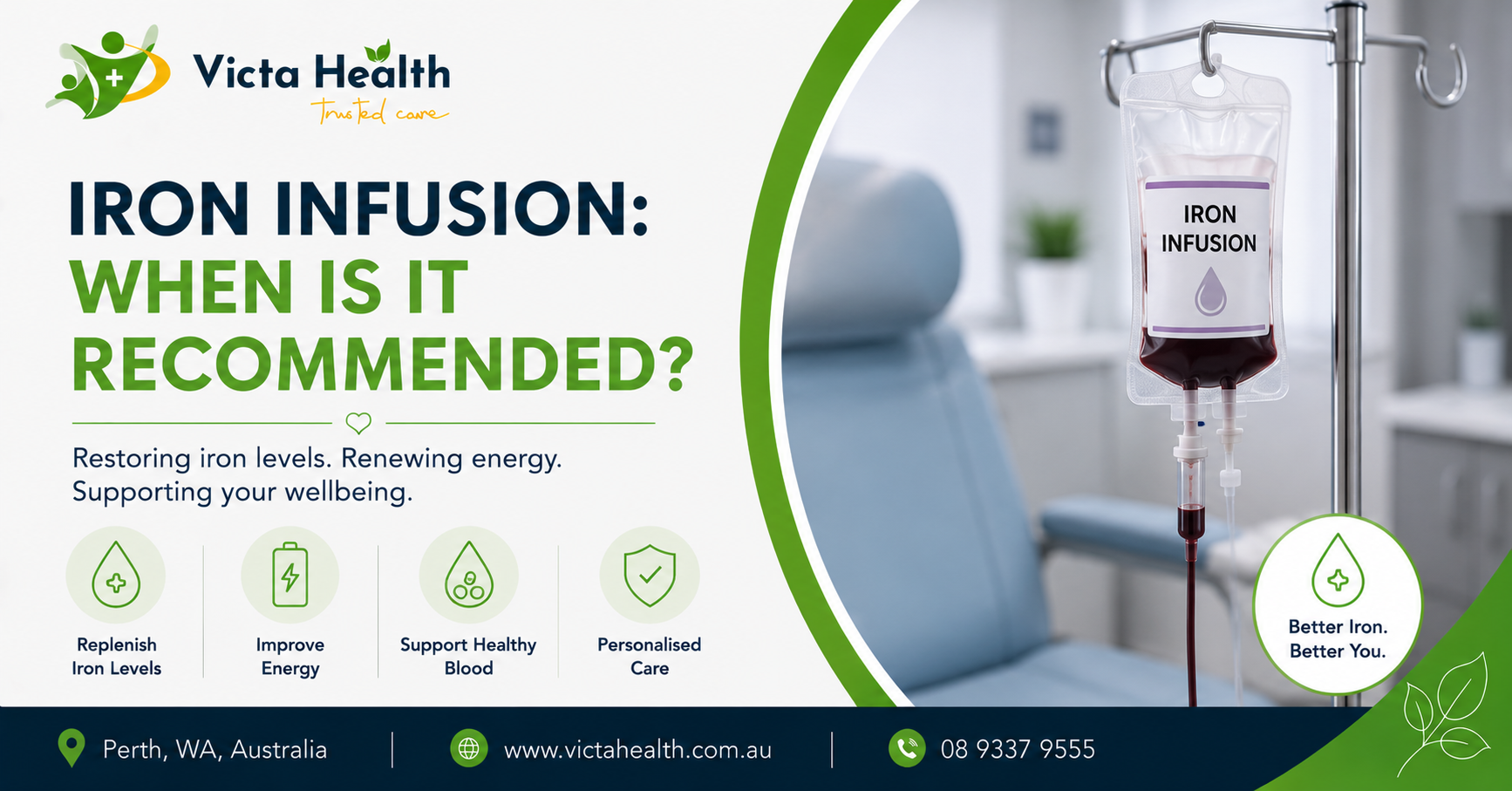
An Iron Infusion is a treatment used to restore iron levels when iron deficiency cannot be managed effectively with oral iron supplements alone. Iron is essential for producing healthy red blood cells and transporting oxygen throughout the body. When iron levels become too low, it can affect your energy levels, concentration and overall wellbeing.
At Victa Health, an Iron Infusion may be recommended after a thorough medical assessment and blood tests to determine the underlying cause of iron deficiency and whether intravenous iron is the most appropriate treatment.
What Is an Iron Infusion?
An iron infusion involves delivering iron into a vein, where it enters the bloodstream to help replenish iron levels. Unlike iron tablets, which are absorbed through the digestive system, intravenous iron allows your body to receive a larger amount of iron in a shorter period.
This treatment is considered only when clinically appropriate and after assessment by a healthcare provider.
When Might an Iron Infusion Be Recommended?
An Iron Infusion may be considered in certain situations where oral iron supplements are not suitable or have not been effective.
Iron Deficiency Anaemia
Iron deficiency is one of the most common reasons for an Iron Infusion, particularly when iron stores are significantly reduced.
Difficulty Tolerating Iron Tablets
Some people experience side effects from oral iron supplements, such as:
- Nausea
- Constipation
- Stomach discomfort
- Abdominal pain
If these side effects make treatment difficult, your healthcare provider may discuss alternative options.
Poor Iron Absorption
Certain medical conditions can reduce the body’s ability to absorb iron from food or oral supplements.
Ongoing Iron Loss
People experiencing ongoing blood loss, such as heavy menstrual bleeding or some gastrointestinal conditions, may require additional assessment and treatment.
Symptoms of Low Iron Levels
Low iron levels may cause a range of symptoms, including:
- Persistent tiredness
- Weakness
- Reduced exercise tolerance
- Shortness of breath
- Dizziness
- Difficulty concentrating
- Pale skin
These symptoms can occur with many medical conditions, so proper assessment is important before treatment.
How Is an Iron Infusion Performed?
An Iron Infusion is performed in a clinical setting by trained healthcare professionals.
Before the Procedure
Your healthcare provider will review your medical history, symptoms and blood test results to confirm whether an Iron Infusion is appropriate.
During the Infusion
Iron is administered slowly through an intravenous (IV) line. The treatment duration varies depending on the type of iron preparation being used.
After the Procedure
Following the infusion, you may be observed for a short period before returning home. Your healthcare provider will advise whether follow-up blood tests are required to monitor your response to treatment.
Are There Any Risks or Side Effects?
Like all medical treatments, an Iron Infusion may have potential side effects. Most are mild and temporary, but uncommon reactions can occur.
Possible side effects include:
- Headache
- Temporary changes in taste
- Nausea
- Muscle or joint aches
- Mild discomfort at the injection site
Your healthcare provider will discuss the potential benefits and risks before treatment.
Can Iron Deficiency Be Prevented?
The prevention of iron deficiency depends on its underlying cause. In many cases, maintaining a balanced diet and identifying medical conditions that contribute to iron loss can help reduce the risk.
If you have ongoing symptoms or recurrent low iron levels, medical assessment is recommended to identify the underlying cause.
Frequently Asked Questions
How long does an Iron Infusion take?
The treatment time depends on the type of iron preparation used. Your healthcare provider will explain what to expect before your appointment.
Is an Iron Infusion better than iron tablets?
Not necessarily. Iron tablets remain the first treatment option for many people. An Iron Infusion is generally considered when oral treatment is unsuitable or ineffective.
How soon will I feel better after an Iron Infusion?
The response varies from person to person. Some people notice improvements within a few weeks, while others may take longer.
Will I need more than one Iron Infusion?
This depends on your iron levels, the cause of your deficiency and how your body responds to treatment.
Do I need blood tests before an Iron Infusion?
Yes. Blood tests help confirm iron deficiency and determine whether an Iron Infusion is the most appropriate treatment.
Conclusion
An Iron Infusion can be an effective treatment for people with iron deficiency when oral supplements are not suitable or have not achieved the desired results. A thorough medical assessment is important to identify the underlying cause of low iron levels and determine the most appropriate treatment plan.
Book an Appointment at Victa Health
If you have symptoms of low iron levels or have been advised that you may benefit from an Iron Infusion, book an appointment at Victa Health. Our healthcare team can assess your symptoms, review your blood test results and discuss appropriate treatment options based on your individual health needs.
Disclaimer
This blog is intended for general educational purposes only and should not be considered medical advice. Individual circumstances vary, and the information provided does not replace a consultation with a qualified healthcare professional. If you have concerns about your iron levels or symptoms, please seek personalised medical advice.