
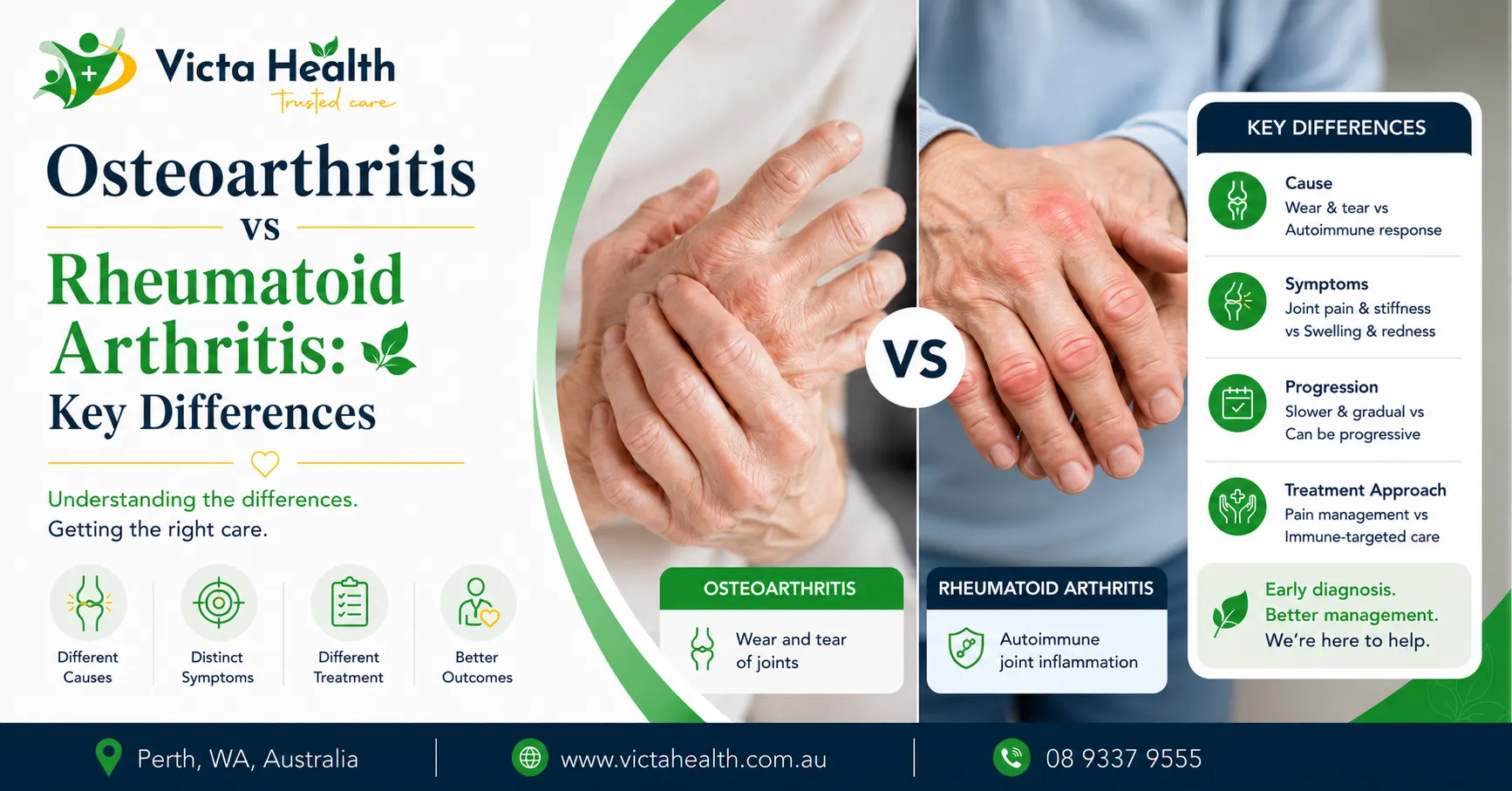
Osteoarthritis vs Rheumatoid Arthritis
When you begin experiencing chronic joint pain, self-diagnosing on the internet often leads to unnecessary anxiety. Understanding the clinical differences between Osteoarthritis vs Rheumatoid arthritis is the first step in finding the right medical pathway. While both conditions cause significant joint discomfort, they originate from entirely different biological processes and require completely different treatment plans.
Understanding the Root Causes
The primary difference between these two conditions lies in what is actually attacking your joints.
The “Wear and Tear” of Osteoarthritis
This is a mechanical issue where the protective cartilage at the ends of your bones gradually degrades over time.
- Example: Years of heavy lifting or running slowly wearing down the natural cushion in your knees, eventually causing bone to rub directly against bone.
The Autoimmune Nature of Rheumatoid Arthritis
This is a systemic disease where your body’s immune system mistakenly attacks the healthy synovial membrane lining your joints.
- Example: Your immune system targeting your joints symmetrically, causing both of your wrists or both of your ankles to become painful and swollen at the exact same time.
Comparing the Key Symptoms
While both cause aching joints, the way the pain presents itself is a major diagnostic clue for doctors.
Symptom Onset and Timing
Osteoarthritis typically develops slowly over many years, whereas rheumatoid arthritis can flare up quite rapidly over a few weeks or months.
- Example: Noticing a gradual increase in knee stiffness over a decade (Osteoarthritis) versus suddenly experiencing severe, hot swelling across multiple fingers in just a few weeks (Rheumatoid).
Duration of Morning Stiffness
Stiffness duration is a key clinical indicator doctors use during a diagnosis of Osteoarthritis vs Rheumatoid joint conditions.
- Example: Osteoarthritis stiffness usually loosens up after 15 to 30 minutes of moving around, while rheumatoid stiffness can leave your joints feeling locked for hours, sometimes lasting until lunchtime.
Frequently Asked Questions
Can you have both at the same time?
Yes. It is entirely possible to have age-related osteoarthritis in your knees while simultaneously developing autoimmune rheumatoid arthritis in your hands.
Which condition is more common?
Osteoarthritis is significantly more common, affecting millions of older adults globally, while rheumatoid arthritis affects a much smaller percentage of the population.
Does diet affect both conditions?
Yes. Managing your diet to reduce systemic joint inflammation is highly recommended for both mechanical and autoimmune joint conditions.
How does a doctor tell the difference?
A GP will evaluate your symptom history and order specific blood tests to look for rheumatoid factors, alongside X-rays to check for cartilage loss.
Book Your Perth Joint Assessment
Stop guessing the difference between Osteoarthritis vs Rheumatoid joint pain. Book a consultation at our arthritis clinic in Perth today to get an accurate clinical diagnosis and a personalized medical management plan.
Medical Disclaimer
For educational purposes only. Consult a GP at Victa Health for a personalized assessment regarding your specific joint symptoms, pain management, and mobility needs.