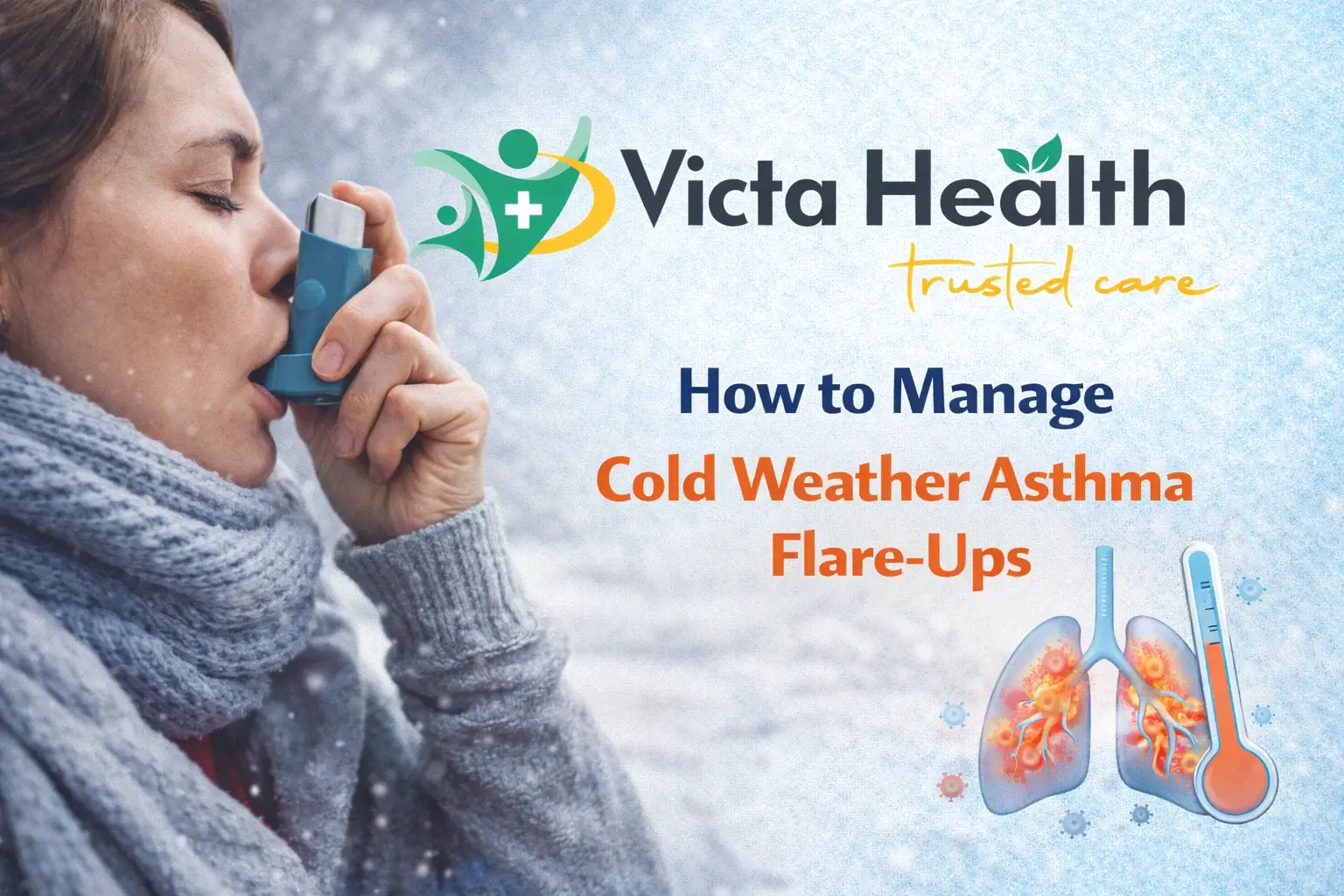
How to Manage Cold Weather Asthma Flare-Ups
As temperatures drop across Perth, the crisp autumn air can be refreshing, but it also introduces new respiratory challenges. For many patients, inhaling cold, dry air acts as a direct irritant to sensitive airways, triggering cold weather asthma. Proactive medical management helps ensure your lungs remain protected and your breathing stays comfortable as we head towards winter.
Why the Change in Season Affects Your Airways
Your respiratory system prefers warm, humidified air. When the environmental conditions change rapidly, it places extra stress on your lungs.
The Impact of Cold, Dry Air
Rapidly inhaling cold air—especially when mouth-breathing during exercise—can cause the muscles surrounding your airways to spasm and narrow. This physiological reaction can quickly lead to coughing, wheezing, and a feeling of tightness in the chest.
Indoor Heating and Airborne Triggers
As we spend more time indoors with the heater running, we increase our exposure to enclosed environmental irritants.
The Allergy Connection
Indoor heating creates an ideal environment for dust mites. If you also suffer from autumn allergies, this combined irritation from allergens and dry air can significantly worsen your underlying respiratory symptoms.
Clinical Steps to Protect Your Respiratory Health
Relying solely on a blue reliever inhaler when symptoms escalate is not a sustainable long-term strategy. A structured, GP-led approach aims to prevent flare-ups before they occur.
Updating Your Asthma Action Plan
A formal, written action plan developed with your doctor provides clear clinical instructions. It outlines when to step up your daily preventer medication and exactly what emergency steps to take during a severe flare-up.
Clinical Lung Assessments
To accurately gauge how the changing season is affecting your airways, your doctor needs objective data.
Spirometry Testing
Your GP may recommend a spirometry test. This simple, non-invasive breathing assessment measures your lung capacity and airway obstruction/restriction, helping your doctor determine if your current inhaler dosages are working effectively.
Preventative Care and Immunity
Respiratory viruses are a major trigger for severe asthma attacks. Getting your seasonal flu vaccine is a highly recommended clinical step to help reduce your risk of secondary respiratory infections during the cooler months.
Frequently Asked Questions
Why does breathing cold air trigger coughing?
Cold, dry air strips moisture from the sensitive lining of your airways. This sudden irritation causes the airways to constrict rapidly, triggering a protective cough reflex.
How can I prevent cold-weather asthma when exercising outdoors?
Doctors recommend engaging in a prolonged, gradual warm-up. Wearing a scarf loosely over your mouth and nose also helps physically warm and humidify the air before it enters your lungs.
What is a spirometry test?
It is a clinical lung function test that measures the volume and speed of the air you can exhale. It helps GPs accurately diagnose type of airway challenge and monitor respiratory health over time.
Should I increase my preventer inhaler dosage in autumn?
Never adjust your prescription medication without medical supervision. Consult your GP to review your action plan and determine if a dosage change is clinically necessary for the season.
Book Your Perth Respiratory Assessment
Do not wait for your breathing symptoms to escalate. Book a standard consultation at Victa Health today to review your asthma management plan, complete a lung function test, and ensure you are fully prepared for the cooler months.
Medical Disclaimer:
This BLOG is for general educational purposes and does not constitute medical advice. Consult a GP at Victa Health to discuss your specific symptoms and medical needs.