
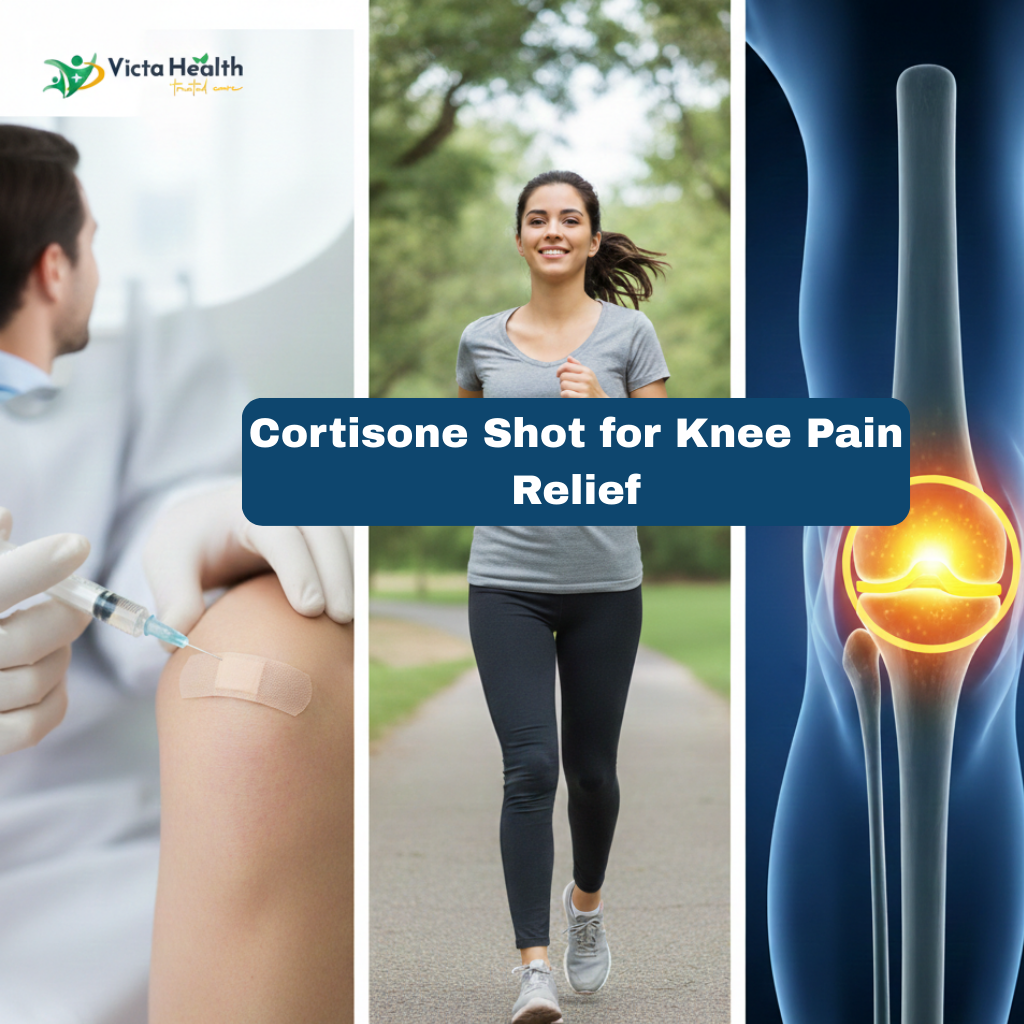
Knee pain from osteoarthritis or injury can bring your daily life to a halt. When rest, ice, and physiotherapy aren’t enough, many patients consider medical intervention. A Cortisone Shot for Knee Pain is a common treatment option designed to reduce inflammation and get you moving again.
At Victa Health, we believe in giving you the clear facts so you can decide if this therapy is the right step for your recovery.
How It Works
Cortisone is a powerful anti-inflammatory medication (a corticosteroid). Unlike painkillers that just mask the sensation, this treatment targets the source of the problem.
- Reduces Swelling: It shrinks the inflamed tissue inside the knee capsule.
- Calms the Joint: It suppresses the immune response that causes heat and pain.
- Restores Movement: With less swelling, the knee can bend and straighten more easily.
When Is It Used?
It isn’t usually the first line of defense, but it can be highly effective for specific stages of knee issues:
- Osteoarthritis flare-ups: When a manageable knee suddenly becomes hot, swollen, and painful.
- Bursitis: Inflammation of the fluid-filled sacs cushioning the knee.
- Pre-Surgery: To provide relief while waiting for a knee replacement.
- Rehabilitation: To lower pain levels enough so you can actually perform your physio exercises.
What to Expect From the Procedure
The appointment is generally quick and straightforward.
- The Injection: The doctor uses anatomical landmarks or ultrasound guidance to place the medication precisely into the joint space.
- The Feeling: You may feel a brief pinch or pressure. Local anaesthetic is often mixed in to provide immediate comfort.
- The Recovery: You will need to rest the leg for 24–48 hours to let the medication settle.
Realistic Expectations
While a Cortisone Shot for Knee Pain can be a game-changer for mobility, it is important to know it is not a permanent cure.
- Duration: Relief typically lasts anywhere from 6 weeks to 6 months, depending on the severity of the arthritis.
- Frequency: Doctors usually limit injections to 3 or 4 times a year to protect the cartilage.
The Next Step
If knee stiffness is stopping you from walking, gardening, or sleeping, it might be time to discuss your options. Our GPs can assess your knee and determine if this treatment plan suits your specific condition.